I feel a little foolish taking a gap year, but then I know how to justify myself to myself. In my A2 year of college I was in the region of 70% sure that I wanted to go to university and excel in my field (English or Drama), about 20% sure I wanted to go to drama school and train as an actor, with 10% not sure if any of it was right at all. I could have applied in my A2 year, my mum says I should've. I can't change the past, however I can now know that what I want to do is go to university and pursue my loves: English and Drama, together as a joint degree. I was mostly sure when I should've been applying, but that 30% was enough of a risk for 3 years of my life and a debt which in all probability I could never repay.
In a way, this gap year is two-fold useful to me: for one, the way I did things means I had time to not make the wrong decision, and for the other, I wouldn't risk having done the right thing and always having wondered if I shouldn't have done something else. Taking time out to make decisions can be an important decision in itself, and if that means taking a whole year out, then so be it. Then again, a whole year is no trifling matter - in fact, it's a 19th of my entire life so far, and that slice of life being on the 'now' end of what I'm living makes it quite ominous, but I'll be damned if that means I'm going to waste a year. I am now set on my course, and this gap year I'm going to make all about giving myself a greg grounding for my study of English and Drama.
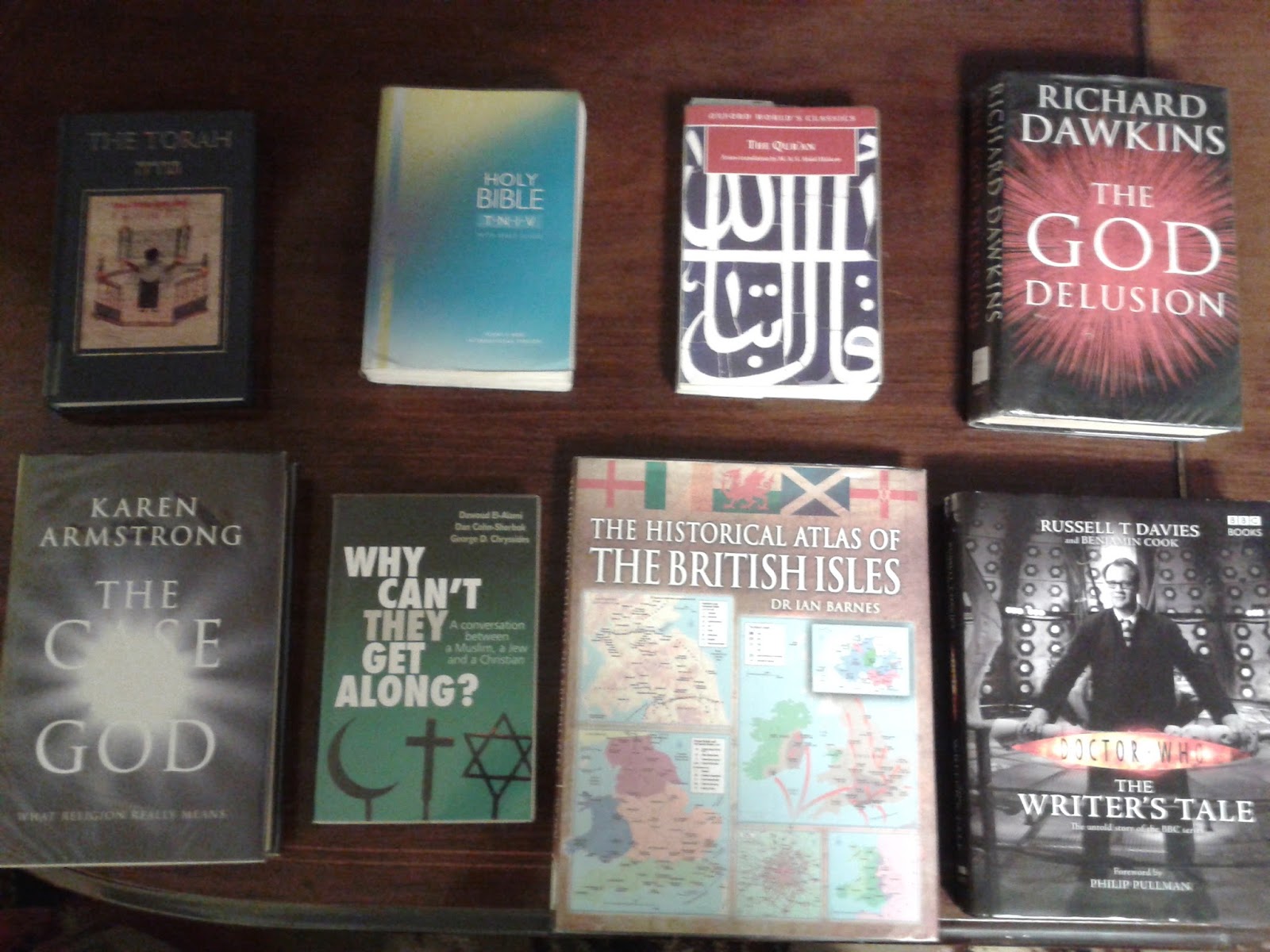
I said in my essay 'Reading and the Riptide' that reading books is like a Fibonacci spiral, each one connecting to many more, and each of those to many more again, exponentially expanding one's consciousness and understanding. I still stand by that assertion and by that logic I thought the best possible place to start my gap year preparation would be the local library. My plan is to get a hugely wide base of understanding to build up from, starting my experience horizontally as it were before building up vertically to more specific knowledge.
Monday, 30 November 2015
Tuesday, 13 October 2015
'Orpheus' - Play review
Little Bulb's 'Orpheus' is continuing its tour at the Liverpool Everyman from 20-24th and Birmingham Repertory Theatre from the 28-31th of October. If you can catch it there then I highly recommend you do and you can find links to tickets on the Little Bulb website here.
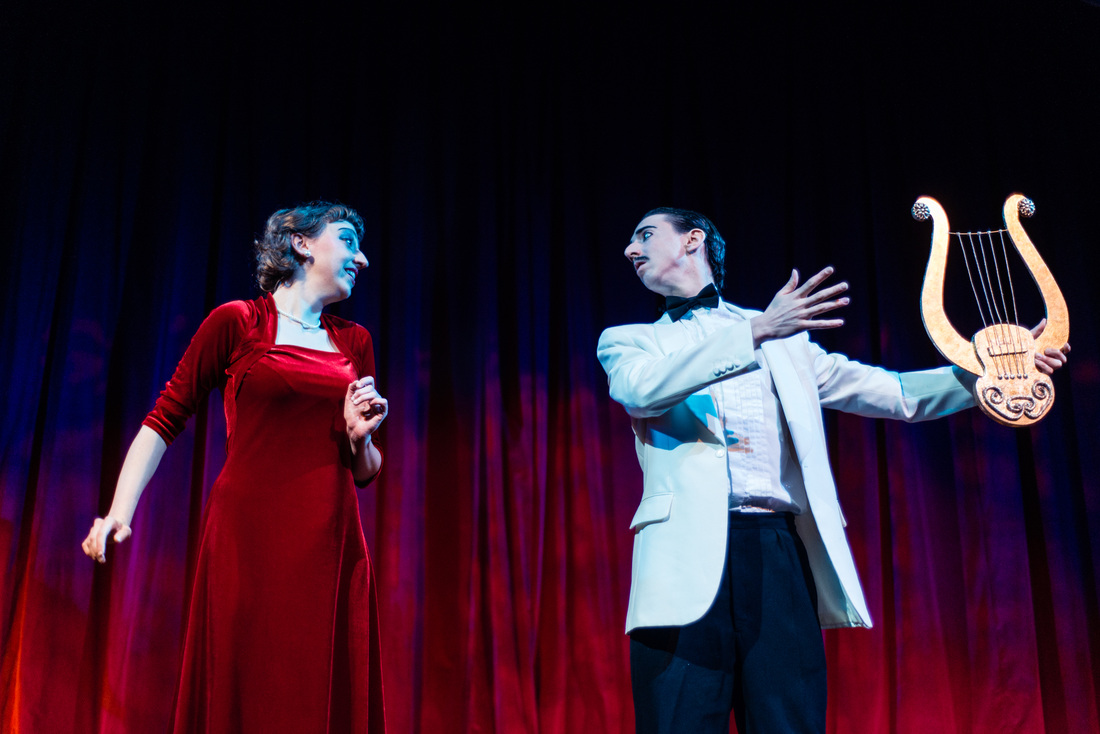
Little Bulb Theatre's production of 'Orpheus' is a reimagining of the Greek myth of Orpheus and Persephone in the style of the European cabaret of the 20s and set to an eclectic soundtrack of club jazz, mock-opera and the music of Django Reinhart. If that sounds like a mad mix that's because it absolutely is, and it's a bloody spectacle to behold.
The production is a co-production between Little Bulb and the Battersea Arts Centre and following the tragedy in March it's wonderful to see work of such colour and optimism still emerging from there. Every moment of the play burns with such vivacity which keeps the mostly wordless plot and the cabaret-inspired frame narrative so enthralling that as an audience you barely notice any time pass. It was a tenet of Nietzsche that Greek tragedy should be a living consolation in its ability remove the audience entirely from reality, and that is entirely the world created here. The story itself has practically no words besides Persephone's song and the narration of the host - and Eugenie Pastor's Yvette Pépin is so emphatic and passionate that one can't help but be totally involved in the tragedy, as she herself is so hyperbolically affected by the story she is telling one can't help being dragged into that world of heightened emotions and tragic fates.
Little Bulb Theatre's production of 'Orpheus' is a reimagining of the Greek myth of Orpheus and Persephone in the style of the European cabaret of the 20s and set to an eclectic soundtrack of club jazz, mock-opera and the music of Django Reinhart. If that sounds like a mad mix that's because it absolutely is, and it's a bloody spectacle to behold.
![]() |
| From Little Bulb Theatre's website |
Tuesday, 12 May 2015
'Avengers: Age of Ultron' - Film review
Well here we are, a year and 10 months later - my 100th published post on Under a Blue Pen! Yesterday I published my 50th review of a Shakespeare film, which is also quite a big number, but for my 100th I thought I'd do something special, something that really gets me enthused and excited: a superhero movie. And what better review to mark this momentous milestone than with the MCU's recent blockbuster spectacular, 'Avengers: Age of Ultron'.
According to Cineworld, in the UK alone 18,400 people looked at cinema booking for 'Avengers: Age of Ultron' in last 24 hours alone. After the monumental success of the Marvel Cinematic Universe so far, the extraordinary first ensemble Marvel film, 'Avengers: Assemble' and the unexpectedly spectacular epic which was 'Captain America: The Winter Soldier', Joss Whedon's latest entry to the MCU and to the Avengers saga manages to continue the legacy, deftly channel the meteoric energy blasting through from the rest of the series which began so long ago and not fail at throwing all of the right punches.
![]() | |
|
Wednesday, 15 April 2015
'Radiant Vermin' - Play review
Wow, my 13th play review. This blog's really going somewhere now. Did you know it's been 40 days since the last day with no viewers? Even when nothing gets posted, astounding. Many apologies for the something of a hiatus that's occurred since my last blog post. In the past six days I've made over 300 revision cards for biology - hard work, y'dig. Last Thursday, almost a week ago, was a nice break from all that, a trip up to London with a friend to see Phillip Ridley's new play at the Soho Theatre in London. Now I'm not one for laughing at theatre - I can appreciate things are funny and be amused by them, but I'm much less inclined to actually vocalise it - not one for crying at theatre either. Not that 'Radiant Vermin', a play about a horrendously ethically-challenged couple who realise that killing homeless people magically furnishes their new dream home however they wish it, made me cry at any time, but dear lord did I laugh.
One of the main reasons I'm fixated on going to drama school in London specifically is the vividness of the theatre scene in London, and the three London theatre trips I've been on in the last three weeks (this, and school trips to see Ivo van Hove's 'Antigone' at the Barbican and 'A View from the Bridge' at the Wyndham's) have really helped to cement that impression. The Soho Theatre is just such a great venue, for quite the opposite grounds that the Barbican and Wyndham's theatres are - it's such a modern venue that it has no pretences about being anything other than a theatre.
![]() |
| Hm, it matches the colour scheme of my blog quite well. |
Saturday, 4 April 2015
Reading and the Riptide
Spring is here! A-spu-ring is here! Life is textbooks and life is highlighters… okay that doesn't quite scan actually. I think the loveliest time of the year is the spring - I do - don't you? 'Course you do. Tom Lehrer references aside, spring is lovely, and spring is most definitely here, as I can finally sleep with the window open, after so long of being unable to over the long and vicious winter we've had. As the Easter 2-week holiday finally arrives, it's time to revel in the new pleasantness replacing the horribleness, time to take something of a breather from the tumultuously busy last few weeks of the 'spring' term and put one's feet up in the only way A-level students know how to:
Ruminating briefly on George Orwell's essay 'Thoughts on the Common Toad', which argues that the innate joy of witnessing nature reincarnate itself at this time of year can be enjoyed despite human goings-on, it seems this new seasonal refreshing burst of life has some joy to offer, even with the triple-threat of looming A-level exams, the looming decision of which HE path I want to take, and the looming possibility that in a month's time the votes will swing in UKIP's favour and the whole country will be bolloxed up and I'll likely have to leave the country. Not because I'm of foreign birth and would be deported, mind, it'd just be too awful to stay here.
Now there is this well-earned break, during this period of reincarnation and rejuvenation, it's possible to reflect on what has been and what is to come.
![]() |
| Yay. |
Now there is this well-earned break, during this period of reincarnation and rejuvenation, it's possible to reflect on what has been and what is to come.
Friday, 3 April 2015
'A View from the Bridge' (Ivo van Hove) - Play review
Sorry the writing of this review is somewhat delayed, I was in my college's 48-hour film competition so didn't have the time until today - luckily with some jigery-pokery of my blog's schedule I could queue in a few reviews I've already written to give myself enough time. Phew. It's been a busy week, after an equally busy week which was last week, when I saw Ivo van Hove's 'Antigone' on Tuesday, and a few weeks ago I saw another version of 'A View from the Bridge' at the Cheltenham Everyman Theatre. I recommend reading at least the latter-mentioned review for comparison. But without any further ado…
I've never actually heard of the Wyndham's Theatre before, which is probably a bad thing for an admiring actor. I've seen it referenced in The Stage before, but couldn't relate the place to the name - anyway, it's a lovely building. Hugely ornate the point of decadence - but in a building of culture, why not have decadence? As with a lot of London theatres the raking of the seats is exceptionally steep to get as many patrons as possible into the space allowed, so, a word to the wise, don't choose a seat in the Grand Circle (or God forbid the Upper Circle or Balcony) if you have vertigo, as the drop is sickening. Well, do, just don't look down, as the perspective on the stage from up there is, while slightly alienating due to distance, certainly remarkable, and the emotion transmits across the space just as well in this production in any case.
![]() |
| A grainy image looking down on the Wyndham's Theatre from the Grand Circle. |
Wednesday, 1 April 2015
'Antigone' - Play review
I studied 'Antigone' last year for my Drama and Theatre Studies AS. Studying something in a vacuum makes it disgusting. There were no productions of 'Antigone' on while we were studying it, or it least no trips organised, so I was disgusted by 'Antigone'. Shortly after my exam there was a production of it on at the Theatre Royal, Winchester, but again, I was too disgusted, I couldn't go. I didn't fail my exam or anything, I got an A, it's just that the play became a piece of educational material and no longer a work of literature. So when a trip was organised for a group of ASs to go and see Ivan van Hove's 'Antigone' at the Barbican I immediately signed up - I'm going to see 'A View from the Bridge' on Tuesday* so I'd like to see what the director's style is and how his works compare. Oh my, I wrote 8 pages of notes.
The first thing to discuss would have to be the venue. In December I went to the Barbican with a friend to watch the RSC's 'Henry IV Part One', and decided that getting a seat in the front row of the circle would be better than a back row in the stalls for the same price. The view was good from up there looking down on the action, and being at the front, however having that cavernous space (for the Barbican theatre is cavernous in size) in front of you when watching a play is somewhat isolating, you feel very much separate from the action, no matter how good it is. The stalls however are an entirely different story. Even row P, where we were sat, felt intimate to the stage. It's a sensation almost unique to the Barbican: the stalls sweep around in such a way that you feel almost deindividuated in the vast space, part of one body which is the audience as opposed to one that is yourself, it's a truly magical theatre, the effects created by the architecture are fabulous. Entering at ground level and descending two flights of stairs to the stalls, then looking up to the circle, upper circle and gallery above you, you feel very much the scale of the theatre space, like a theatrical ant's nest, or underground beehive, again, magical. I've been reading a lot of Nietzche's tragic theory recently and the Barbican seems the perfect place to stage a tragedy, as you are immediately swept up into another world, that being the world of the story.
![]() |
| I couldn't get a picture of the set. Here is a ticket. |
Sunday, 29 March 2015
'A View from the Bridge' (Everyman Theatre) - Play review
The Everyman is specified in the title of this as I'm going to see another 'A View from the Bridge' in a few weeks at the Young Vic, the one starring Mark Strong as Eddie and directed by Ivo van Hove, who also directed the version of 'Antigone' which I watched at the Barbican last night. It's been slightly over a week since I saw this 'A View from the Bridge' at the Everyman Theatre as I had a very busy week this week - I might even write a blog post to relate it as a lot went down, as it were. Luckily for myself, as I have 4 reviews to write today/this weekend, I only wrote 4 pages of notes during the performance, so this review shouldn't take so long (oh gosh writing up 'Antigone's going to be a slog). But without further ado - a review of 'A View from the Bridge' at the Everyman Theatre, Cheltenham.
The party I went with were all A-level drama students, studying the play as the A2 paper involves writing a section of the play as if you're directing it. The trip was optional - as mentioned previously we're also going to see Ivo van Hove's production next Tuesday - it was just for the most enthusiastic students to get a more well-rounded view of possible interpretations of the play. That being said, reception of the play was quite varied within the group. I was personally in the camp who had been pleased by it, there was also a camp whose opinion could be described with the sound 'meh', and a camp whose opinion approached middling disdain.
![]() |
| A lovely view of the bridge. |
Friday, 20 March 2015
'Consolation' (for S. Davies)
Though the two of us are separate
And c'mitments keep us far away,
Filial love is intimate
On any sharéd day.
Though th'working week may inspire rage
And Solent waters do the same,
Distance is but a temp'ry cage
And time a temp'ry shame.
This time for you is hard I know,
And myriad choices plague your thoughts,
Let it be known that I and Joe
Wish to make your terrors nought,
So, please remember that you needn't be afeared -
You have my little brother Joe to keep your family near.
And c'mitments keep us far away,
Filial love is intimate
On any sharéd day.
Though th'working week may inspire rage
And Solent waters do the same,
Distance is but a temp'ry cage
And time a temp'ry shame.
This time for you is hard I know,
And myriad choices plague your thoughts,
Let it be known that I and Joe
Wish to make your terrors nought,
So, please remember that you needn't be afeared -
You have my little brother Joe to keep your family near.
Saturday, 14 March 2015
Tom Hiddleston at the Nuffield
[Important note: my memory is not perfect and I cannot write in shorthand, only note-form. Speech in 'inverted commas' is not a direct quote but a loose quote formed by filling in prepositions, etc, skipped out in note form and may not be exactly what was said. Imagine Capote's 'In Cold Blood', basically.]
This post is long overdue, I'm sorry guys, but what can I say, I'm a busy person. The real rush to finish this comes as I'm going to another Q&A with author A. L. Kennedy on Monday 16th (of March) and will most definitely want to write about that as well, and I don't want to confuse anyone with the order of things. So the particular evening I'm talking about was a couple of weeks ago, the 22nd of February to be exact, and I apologise for the lateness, but I made 6 pages of notes so don't expect any less than if it had been yesterday.
I'm very proud of the Nuffield Theatre as it's the first theatre that I felt a real part of, and intend to work there in the future, and intend to return to as a professional actor to perform on that stage. The Nuffield is undeniably going places, and I'm fortunate that it took me into its heart - especially since I'm from the Isle of Wight, a different county. The Q&A comes just a few weeks after the news that the Nuffield won 'The Stage's regional theatre of the year 2014; it felt special to be in a celebrating theatre with a pair of very successful men talking about their industry.
This post is long overdue, I'm sorry guys, but what can I say, I'm a busy person. The real rush to finish this comes as I'm going to another Q&A with author A. L. Kennedy on Monday 16th (of March) and will most definitely want to write about that as well, and I don't want to confuse anyone with the order of things. So the particular evening I'm talking about was a couple of weeks ago, the 22nd of February to be exact, and I apologise for the lateness, but I made 6 pages of notes so don't expect any less than if it had been yesterday.
I'm very proud of the Nuffield Theatre as it's the first theatre that I felt a real part of, and intend to work there in the future, and intend to return to as a professional actor to perform on that stage. The Nuffield is undeniably going places, and I'm fortunate that it took me into its heart - especially since I'm from the Isle of Wight, a different county. The Q&A comes just a few weeks after the news that the Nuffield won 'The Stage's regional theatre of the year 2014; it felt special to be in a celebrating theatre with a pair of very successful men talking about their industry.
Monday, 16 February 2015
Utopia - Season 1 - Review
A long-term reader of this blog will notice that TV shows generally get a short review per episode. Why then, you ask, does 'Utopia', the Channel 4 series from 2013, only get one review for the entire first series? The answer, is because I was so enthralled by this show that I watched the entire ~6 hour spectacle in one sitting.
It's a show that I was aware of but had never had any compulsion to watch. This was probably because I'd only seen billboards for it, in which it looked interesting (I suspect if I'd seen a trailer for it I definitely would have stuck around to watch it, it's that striking) but not interesting enough to make me watch TV. I'm a college student, of course I don't watch TV. The concept of it did of course look interesting… whatever it was, so when I logged on to Netflix for the first time in several months and it was the top of my suggested watch-list I thought, why not, and that is basically the story of how I lost an entire day.
![]() |
| Bright and bold, the title card reflects the punchy vibe of the show. |
Saturday, 7 February 2015
Medical Examination
I pulled down the stiff, wrought-iron door handle and dragged open
the heavy, gloss-black-painted front door to West Street surgery. The building
itself was a two story Victorian town house that had been converted into a
general practitioners’ practice in the 60s. The door was four inches thick and
had a strong hinge that required a hefty tug and left one slightly unbalanced
after wrenching it open. I had an awkward altercation with someone trying to come
out of the building as I was going in – I let them past, they let me past, I
hesitated a little longer than them so they pushed past and gave me a little
appreciative nod. A pointless gesture that wasted ten seconds of both of our
lives.
Beyond the door, the reception desk was immediately off to the left
and the waiting room was to the right up a flight of three stairs. Between
these two destinations, in the opposite wall, was a door marked ‘private’,
which presumably led around the corner to reception, next to which set into the
wall was a small black plastic box similar to a letterbox, marked ‘repeat
prescriptions’. I took a left.
The reception was a rectangular hole in the wall, three foot high by
five foot wide, at hip height, so that I had to stoop slightly to look in. The
bottom edge formed a desk with a computer, behind which was sat a lady in her
fifties.
“Hi, I’ve got an appointment at four thirty”
The lady tapped at the computer keyboard for a few seconds.
“Name?” she requested, flatly.
“Jackson, um, John”
To the left of the desk was a corridor, running parallel to the front
door, with two practice rooms, one of which I knew from past experience was
where they administered holiday vaccines for tropical diseases. I flicked my
eyes down the corridor to avoid the impression that I was staring at the
reception lady, then looked back when she addressed me again.
“Yes, Doctor Fleischer’s a little behind today, take a seat.”
“Thank you.”
I turned as smoothly as I could and walked up the three steps into
the waiting room. Five of the seats were occupied: a young, grizzly couple
hissing back and forth at each other under their breaths; an elderly man who
looked to be in impeccable health with a walking stick; a mother and her young
child, who had rashes on his wrists. The waiting room had chairs lining the two
opposite walls and half of the wall that had the door to the bathroom. I found
a chair as removed as possible from everyone else to sit down – two chairs to
the right of the mother, almost opposite the elderly man, with the couple in
the farthest corner from me. This gave me a good view of the three steps
leading back down to reception, from whence I had just come, and the three more
steps leading further up into the rest of the building, where the majority of
the practice rooms were.
Doctor Fleischer ended up being about forty minutes late, meaning I
had to sit a while. During that time the couple were escorted down the stairs
to one of the practice rooms by reception and the elderly man was called up the
stairs. A couple more people came in to sit in the waiting room – a fat man who
was entirely bald and sat down with a huff, and another elderly man – but I
paid them little attention as I was sat waiting.
I also developed a headache that lasted about ten minutes and went
away again.
“Mister Jackson?” a voice called from up the stairs, before a male
head peeked around the corner to scan the waiting room for me.
Tuesday, 16 December 2014
English Coursework Afterthoughts.
'Tomorrow, and tomorrow, and tomorrow / Creeps in this petty pace from day to day / To the last syllable of recorded time; / And all our yesterdays have lighted fools / The way to dusty death.' (5.v.18)
I think that passage of Macbeth's soliloquy roughly sums up the mindset on the final stretch of perfecting a 1,500 word essay comparing 'Macbeth' and 'Pulp Fiction'. Between 3 hour 'Wuthering Heights' rehearsals and all day Sunday 'The Hero That Panto Deserves' rehearsals and assignments for my other subjects, staying up til midnight checking whether this word is an adverb or in this instance (and this instance alone, apparently) perhaps a pronoun, if this clause could be counted as an interrogative even though its in the middle of a complex sentence, checking this line reference actually corresponds to the quote and painstakingly checking the 70:30 'Macbeth':'Pulp Fiction' ratio.
Friday, 14 November 2014
'Institute' - Play review
Last year at roughly this time I went on a school (college…) trip that completely changed my opinion of physical theatre. I am a Drama student, but policy is at Peter Symonds that students can go on trips of other subjects/departments if it isn't filled up by students from its subject. When offered if I wanted to go with the Performance Studies crowd to go and see Gecko's 'Missing' I though "why not?", it was a chance to see another play and broaden my experience and I knew some of the people going so it was a fun thing to do as a group. If my memory were that sharp I would write a review entirely dedicated to last year's 'Missing', but it isn't. A few details I remember were that no two characters spoke the same language, there was excellent use of puppetry and there was an excellent use of lighting effects - and of course, physical acting. But what I took away from the whole experience, though I can't remember individual details after this much time, was 'holy crap'.
Gecko's performances are like a very special type of drug, the experience of the high itself may fade, but the memory of the feeling lasts and makes you want more.
Sunday, 2 November 2014
'Frankenstein' - Play review
I'm putting this under the heading of 'Play review' even though I saw it at my local cinema as I can't really classify it as a film review. This was a National Theatre Live production, which made another rounds of the cinema because everybody was so wowed by it the first time, and now catching it just before it closes for the last time I can definitely see why.
Directed by Danny Boyle, the National Theatre's 'Frankenstein' was originally staged in 2011 and (as a brief introductory documentary told us) starred both Benedict Cumberbatch and Jonny Lee Miller as both the titular Victor Frankenstein and his Creature. In that, one night Cumberbatch played Frankenstein and Miller would play the Creature, and then the next Miller would play Frankenstein and Cumberbatch would play the Creature.
Saturday, 25 October 2014
'Macbeth' vs. 'Pulp Fiction'
Well aren't you glad I put the inverted commas around 'Macbeth' there. Could you imagine "Macbeth vs. 'Pulp Fiction'"? I'm not entirely sure how it'd work - maybe Butch (Macbeth) is Marsellus's (Duncan) prize fighter, and after killing Vince (the old Thane of Cawdor) he realises he can overthrow Marsellus - maybe it wouldn't work, that was a silly idea. Anyway, at least I can pick out some similarities, if a little tenuous, as my task over this half-term is to write an epic piece of coursework. It is a 1,500 word essay, equivalent to 10% of my entire A-level (insert terrified emoji here), based on a question of our composition.
Originally I was going to come up with something quite long and convoluted like exploring the paranoia, the lengths people will go to in order to achieve power and then the lengths in order to maintain it, as paranoia is a theme in 'Macbeth' which really interests me, and it's sort of applicable to 'Pulp Fiction'.
Sunday, 19 October 2014
'Othello' - Play review
I was intending to watch those 4 'Othello' DVDs from the library all before I watched the show (I'm currently halfway through the third) but extenuating circumstances occurred, and I was fairly sure after watching the first one I knew the story anyway. I've seen Frantic Assembly once before, I saw their 'Beautiful Burnout' at the Nuffield 3 years ago for my drama GCSE and that just totally blew me away. Since then I started acting myself, and my director at the Nuffield Youth Theatre, Max Lindsay, is always saying how he got such and such an exercise from Frantic, or something drew an influence from them. At Hampshire Youth Theatre we even had a workshop with them for 'Great Expectations'.
So since starting acting myself and being involved in a lot of Frantic-inspired stuff I haven't actually seen a Frantic show, and what with me trying to watch as many Shakespeare films as possible before going to drama school, and what with the £5 tickets for Nuffield YT members, Frantic's 'Othello' was the perfect chance to see something awesome and personally significant.
And god daaaaaaaaaaaaamn that is how you do Shakespeare my friends, that is how you do Shakespeare.
If you want a bit of background if you haven't seen it already, it's been modernised to a bar/pub in northern England… On the Isle of Wight we'd call the society 'chavs', but I've got out of the habit of using that pathetic word thankfully. I just mean it's set in a violent, patriarchal hyper-sexualised microcosm (in which they all happen to wear nike hoodies, sweatpants and trainers) in which one's violence is what establishes and maintains one's status. These microcosms exist in contemporary society but it's perfectly possible to translate this story of violence, jealousy and revenge into one as they are separate from the values of the rest of society. And the translation is perfect: the words are all the same but the inflection and context give them different meaning - the 'Turks' are a rival gang coming to attack 'the Cypress', the pub in which the play is set, and Othello's 'lieutenant' is a trusted friend, etc., etc.
So since starting acting myself and being involved in a lot of Frantic-inspired stuff I haven't actually seen a Frantic show, and what with me trying to watch as many Shakespeare films as possible before going to drama school, and what with the £5 tickets for Nuffield YT members, Frantic's 'Othello' was the perfect chance to see something awesome and personally significant.
And god daaaaaaaaaaaaamn that is how you do Shakespeare my friends, that is how you do Shakespeare.
If you want a bit of background if you haven't seen it already, it's been modernised to a bar/pub in northern England… On the Isle of Wight we'd call the society 'chavs', but I've got out of the habit of using that pathetic word thankfully. I just mean it's set in a violent, patriarchal hyper-sexualised microcosm (in which they all happen to wear nike hoodies, sweatpants and trainers) in which one's violence is what establishes and maintains one's status. These microcosms exist in contemporary society but it's perfectly possible to translate this story of violence, jealousy and revenge into one as they are separate from the values of the rest of society. And the translation is perfect: the words are all the same but the inflection and context give them different meaning - the 'Turks' are a rival gang coming to attack 'the Cypress', the pub in which the play is set, and Othello's 'lieutenant' is a trusted friend, etc., etc.
Friday, 10 October 2014
'1984' - Play review
Just as a warning I've seen this play once before already and worked a lot out about it, so there will be definite spoilers. Careful reading if you haven't seen it, I want to mention everything about how awesome it was.
Last year for my Drama and Theatre Studies AS I was fortunate enough to go on a trip to Salisbury to watch Headlong's '1984' in the Salisbury Playhouse. I ended up writing about it in my 'Live productions scene' exam and got an A for drama overall. So you can understand my excitement when, almost exactly a year later, I learn that Headlong are bringing back their '1984' and to my local Nuffield Theatre.
There's something to be said for saying the play more than once. If it's just the same script done by different companies that can be helpful, as I'm learning from my watching of all the Shakespeare films I can get my hands on, for seeing the various ways the text can be interpreted, and through that odd form of cross-examination getting closer to what the original writer may have been trying to say.
But watching the exact same show is something quite different entirely, especially with the long time difference.
Last year for my Drama and Theatre Studies AS I was fortunate enough to go on a trip to Salisbury to watch Headlong's '1984' in the Salisbury Playhouse. I ended up writing about it in my 'Live productions scene' exam and got an A for drama overall. So you can understand my excitement when, almost exactly a year later, I learn that Headlong are bringing back their '1984' and to my local Nuffield Theatre.
There's something to be said for saying the play more than once. If it's just the same script done by different companies that can be helpful, as I'm learning from my watching of all the Shakespeare films I can get my hands on, for seeing the various ways the text can be interpreted, and through that odd form of cross-examination getting closer to what the original writer may have been trying to say.
But watching the exact same show is something quite different entirely, especially with the long time difference.
Tuesday, 7 October 2014
'Three Men in a Boat' - Play review
I'm a part of the Nuffield Youth Theatre, and one of the peers of being thus is that I can get £5 tickets to most shows which come to the Nuffield. This time, as with 'The Events', my director stressed how good this play is, so I went along to see what it's all about. (Just for the record I also have tickets to go and see 'Othello' and '1984')
Normally I don't think I'd really choose to watch a comedy. From my experience, I much prefer tragedies, horror, war, things with a sad ending, or at least where characters have to face up to serious adversity. Much of my new experience watching Shakespeare's plays is changing my opinion of comedies and happy plays, and I must say I thoroughly enjoyed. I'm not much of a laugher. I'm sure a normal person would have 'been in stitches', but I laughed more than I normally do.
If you don't know 'Three Men in a Boat' (I know I sat down in the theatre knowing nothing about it), it's set in a pub, and it's three London gentlemen humorously telling the humorous story of their holiday on the Thames. The three main actors had excellent comedic synergy between them, and because it was a something of a play-within-a-play whenever they made a mistake in telling the story they could make it part of the joke that the main characters aren't very good at telling their story.
Normally I don't think I'd really choose to watch a comedy. From my experience, I much prefer tragedies, horror, war, things with a sad ending, or at least where characters have to face up to serious adversity. Much of my new experience watching Shakespeare's plays is changing my opinion of comedies and happy plays, and I must say I thoroughly enjoyed. I'm not much of a laugher. I'm sure a normal person would have 'been in stitches', but I laughed more than I normally do.
If you don't know 'Three Men in a Boat' (I know I sat down in the theatre knowing nothing about it), it's set in a pub, and it's three London gentlemen humorously telling the humorous story of their holiday on the Thames. The three main actors had excellent comedic synergy between them, and because it was a something of a play-within-a-play whenever they made a mistake in telling the story they could make it part of the joke that the main characters aren't very good at telling their story.
Sunday, 21 September 2014
'The Events' - Play review
The Nuffield Theatre in Southampton is my 'home' theatre. I come from the Isle of Wight, but I've been going there to see plays since I first had an interest in theatre, and I have never been disappointed with what I've seen there. It's such an amazing theatre which always seems to attract such astounding shows - so when I heard there was a lot of fervour about 'The Events', which had won the Guardian's 'Best Theatre of 2013' and was coming to the Nuffield, I knew I had to see it.
I felt emotionally challenged by it. The play uses a different local choir in every night of the show, so the cast of two are greatly outnumbered by people who aren't actors but are encouraged by the script to take an active role in the action. This strange fusion of 'unpolished' and 'appropriate' just made the events more raw - this is a play about real, ordinary people. People who aren't actors, who don't know how to stand up on a stage in front of 70 people anymore than they would know what to do if a white extremist walked into their choir rehearsal with a gun. You are watching people who have been taken out of their normal routine and made to do something they aren't suited to - the Nuffield Fringe Choir being made to participate in the dialogue on stage are like the actual choir in the story being encouraged to talk about the horror they'd witnessed.
A particular moment of this which stood out to me, and still stands out to me the day after, is a man coming out of the choir with his script to tell Claire that he doesn't want to do the choir anymore. To you and me, he is anonymous. I have never seen him before, he is a shy man whose name I will never know - he is, to me, a nobody. And yet here he is centre stage, Claire has just collapsed with grief, he picks up his script and leaves the choir and suddenly he is part of this action, with a little microphone. In a quiet expressionless voice, a voice which sounded to me like it was genuinely reading the words on the page for the first time in his life, 'Claire, we don't want to do choir anymore'. A pause. 'It isn't fun'. Another pause. 'It's depressing. We like singing pop songs… and hymns.'
I know I should probably be talking about the actors in this review, but to me it was the choir of non-actors whose presence affected me the most.
Speaking of the choir, the music was beautiful. I think everyone in the audience was surprised when a play about a mass shooting started with a jolly choral rendition of 'Do You Hear The People Sing' from Les Mis, but it was lovely. I hugely admire Magnus Gilljam, listed in the programme as the 'pianist' - I assume he also wrote the music arrangements. He was never present in the action, more he conduct the choir into the events. The beautiful simplicity of the music and the playful piano parts jarred against the horror of the events, I imagine it as some metaphor for how the music was supposed to bring them together. I was always aware of Gilljam, half of my mind or the corner of my eye kept watching him though the action, how through a very fraud and emotional scene he would calmly gesture to the choir to stand or sit or hum or sing and mouth along with them to keep them in time together. I don't know why, but I kind of imagined him as music itself. An image which was shattered by his modest shrug in the bows, but a beautiful image while it lasted.
Derbhle Crotty played the main character, Claire, the leader of a multicultural choir group at a community centre on the side of a community centre. An unknown time ago, a crazed boy, a white supremacist, practised an ancient Viking ritual used to turn oneself into a berserker, got a gun and walked into the choir, shooting people to the very last bullet (which, it turns out, was almost for Claire). She did an excellent job of playing Claire, portraying not the emotions I would have expected from a victim of such trauma, but which seemed so very real given the circumstances.
The acting from Clifford Samuel ('The Boy' in the programme) was astounding. He seemed to truly transcend any singular aspects of class, gender, sex or race. He would just be going through a scene and I wouldn't be entirely aware of who he was, and then Claire would mention his name and I'd review everything I'd just seen and think 'oh of course he's a woman', 'oh of course he's a white supremacist'. He must have played at least 10 different characters, incredibly subtly, but as soon as I was aware of who he was supposed to be playing I got it from him straight away. My favourite scene of everything which involved Clifford Samuel and Derbhle Crotty was Claire's attempted suicide. The scene changed and I had no idea where we were. Samuel played an anonymous stranger talking to her nicely about how nice the view is, asking for her name and if he can hold her hand. Only when he grips her by the forearm instead and leans his body weight away from her did I realise we're on the edge of the cliff - and 'oh of course we're on the edge of a cliff'.
I think the most effective/affective/soul-destroying element of 'The Events' was that, it never was so lazy as to blurt things in your face, everything was a slow realisation. A slow realisation which suddenly kicks you in the gut.
A bit odd in a review about a play such as this to talk about the lighting, especially since I'm an actor and don't know two shits about lighting, but something about the lighting is it was never definite when we left the theatre and moved to the play and when we came back again. The house lights were all still up when the choir came on stage and never went out, just faded out slow through the first few scenes. At first these are two actors on stage and this is a choir from Southampton, and I don't know at which point I was suddenly very sure that this was no longer a choir of people I knew but a choir from a totally different place. Again, at the end, in the last rehearsal of the choir I became aware of the houselights coming up, and when Crotty came out of character to congratulate the Southampton Fringe Choir we were back in Southampton. But did we leave? If so, when, and when did we come back?
The transcendence of this play are what made it so phenomenal to me. The shooter was never named, not the politician, the town where it happened, even the country. 'The Events' could have happened absolutely anywhere and it seemed to have happened right in the Nuffield Theatre, right in front of my eyes. I'm giving this play a 9/10.
I felt emotionally challenged by it. The play uses a different local choir in every night of the show, so the cast of two are greatly outnumbered by people who aren't actors but are encouraged by the script to take an active role in the action. This strange fusion of 'unpolished' and 'appropriate' just made the events more raw - this is a play about real, ordinary people. People who aren't actors, who don't know how to stand up on a stage in front of 70 people anymore than they would know what to do if a white extremist walked into their choir rehearsal with a gun. You are watching people who have been taken out of their normal routine and made to do something they aren't suited to - the Nuffield Fringe Choir being made to participate in the dialogue on stage are like the actual choir in the story being encouraged to talk about the horror they'd witnessed.
A particular moment of this which stood out to me, and still stands out to me the day after, is a man coming out of the choir with his script to tell Claire that he doesn't want to do the choir anymore. To you and me, he is anonymous. I have never seen him before, he is a shy man whose name I will never know - he is, to me, a nobody. And yet here he is centre stage, Claire has just collapsed with grief, he picks up his script and leaves the choir and suddenly he is part of this action, with a little microphone. In a quiet expressionless voice, a voice which sounded to me like it was genuinely reading the words on the page for the first time in his life, 'Claire, we don't want to do choir anymore'. A pause. 'It isn't fun'. Another pause. 'It's depressing. We like singing pop songs… and hymns.'
I know I should probably be talking about the actors in this review, but to me it was the choir of non-actors whose presence affected me the most.
Speaking of the choir, the music was beautiful. I think everyone in the audience was surprised when a play about a mass shooting started with a jolly choral rendition of 'Do You Hear The People Sing' from Les Mis, but it was lovely. I hugely admire Magnus Gilljam, listed in the programme as the 'pianist' - I assume he also wrote the music arrangements. He was never present in the action, more he conduct the choir into the events. The beautiful simplicity of the music and the playful piano parts jarred against the horror of the events, I imagine it as some metaphor for how the music was supposed to bring them together. I was always aware of Gilljam, half of my mind or the corner of my eye kept watching him though the action, how through a very fraud and emotional scene he would calmly gesture to the choir to stand or sit or hum or sing and mouth along with them to keep them in time together. I don't know why, but I kind of imagined him as music itself. An image which was shattered by his modest shrug in the bows, but a beautiful image while it lasted.
![]() |
| Before 'The Events' started. Those stairs are where the choir spent most of their time sat, and the piano got swivelled round 90 degrees anticlockwise to face the opposite side of the stage. |
The acting from Clifford Samuel ('The Boy' in the programme) was astounding. He seemed to truly transcend any singular aspects of class, gender, sex or race. He would just be going through a scene and I wouldn't be entirely aware of who he was, and then Claire would mention his name and I'd review everything I'd just seen and think 'oh of course he's a woman', 'oh of course he's a white supremacist'. He must have played at least 10 different characters, incredibly subtly, but as soon as I was aware of who he was supposed to be playing I got it from him straight away. My favourite scene of everything which involved Clifford Samuel and Derbhle Crotty was Claire's attempted suicide. The scene changed and I had no idea where we were. Samuel played an anonymous stranger talking to her nicely about how nice the view is, asking for her name and if he can hold her hand. Only when he grips her by the forearm instead and leans his body weight away from her did I realise we're on the edge of the cliff - and 'oh of course we're on the edge of a cliff'.
I think the most effective/affective/soul-destroying element of 'The Events' was that, it never was so lazy as to blurt things in your face, everything was a slow realisation. A slow realisation which suddenly kicks you in the gut.
A bit odd in a review about a play such as this to talk about the lighting, especially since I'm an actor and don't know two shits about lighting, but something about the lighting is it was never definite when we left the theatre and moved to the play and when we came back again. The house lights were all still up when the choir came on stage and never went out, just faded out slow through the first few scenes. At first these are two actors on stage and this is a choir from Southampton, and I don't know at which point I was suddenly very sure that this was no longer a choir of people I knew but a choir from a totally different place. Again, at the end, in the last rehearsal of the choir I became aware of the houselights coming up, and when Crotty came out of character to congratulate the Southampton Fringe Choir we were back in Southampton. But did we leave? If so, when, and when did we come back?
The transcendence of this play are what made it so phenomenal to me. The shooter was never named, not the politician, the town where it happened, even the country. 'The Events' could have happened absolutely anywhere and it seemed to have happened right in the Nuffield Theatre, right in front of my eyes. I'm giving this play a 9/10.
Subscribe to:
Posts (Atom)


